Aging Athletes - Why CrossFit is a MUST
February 26, 2024
As we age, there are some things that are inevitable. Among many the common belief is that as we age our ability to perform work diminishes. And when that happens we are alright with it. Well I say screw that!!!

Some things are inevitable and there’s nothing we can do to avoid it, eventually time does catch up to us but there are things we can do to push back and delay the onset of those things as much as possible. This can range from cardiovascular disease to muscle and bone density losses or even mental health decline, to name a few.
There are a lot of myths in regard to the aging athlete. What they can and cannot do, or what they should be allowed or not allowed to do. Before that, I want to make it clear who is an “aging athlete”. I also want you to know that I am pulling information directly from the CrossFit Masters Training Guide which they use as a teaching guide for the CrossFit Education Course “Coaching the Aging Athlete”. An “aging athlete” is anyone 40 years of age and older. Understang that the 40 year old athlete isn’t going to be grouped up in the same category as a 85 year old athlete. At certain ages we see differing rates of things like sudden death from cardiac arrest (for example the difference in 55 year old individuals is statistically more significant than in 40 year old individuals). The opposite could be true though. For example a 65 year old athlete who has been doing CrossFit for 10 years is probably going to be healthier and fitter than a 45 year old individual who just started doing CrossFit yesterday (most likely). It’s a spectrum. One that isn’t very clear on paper but in person it can be easily seen.
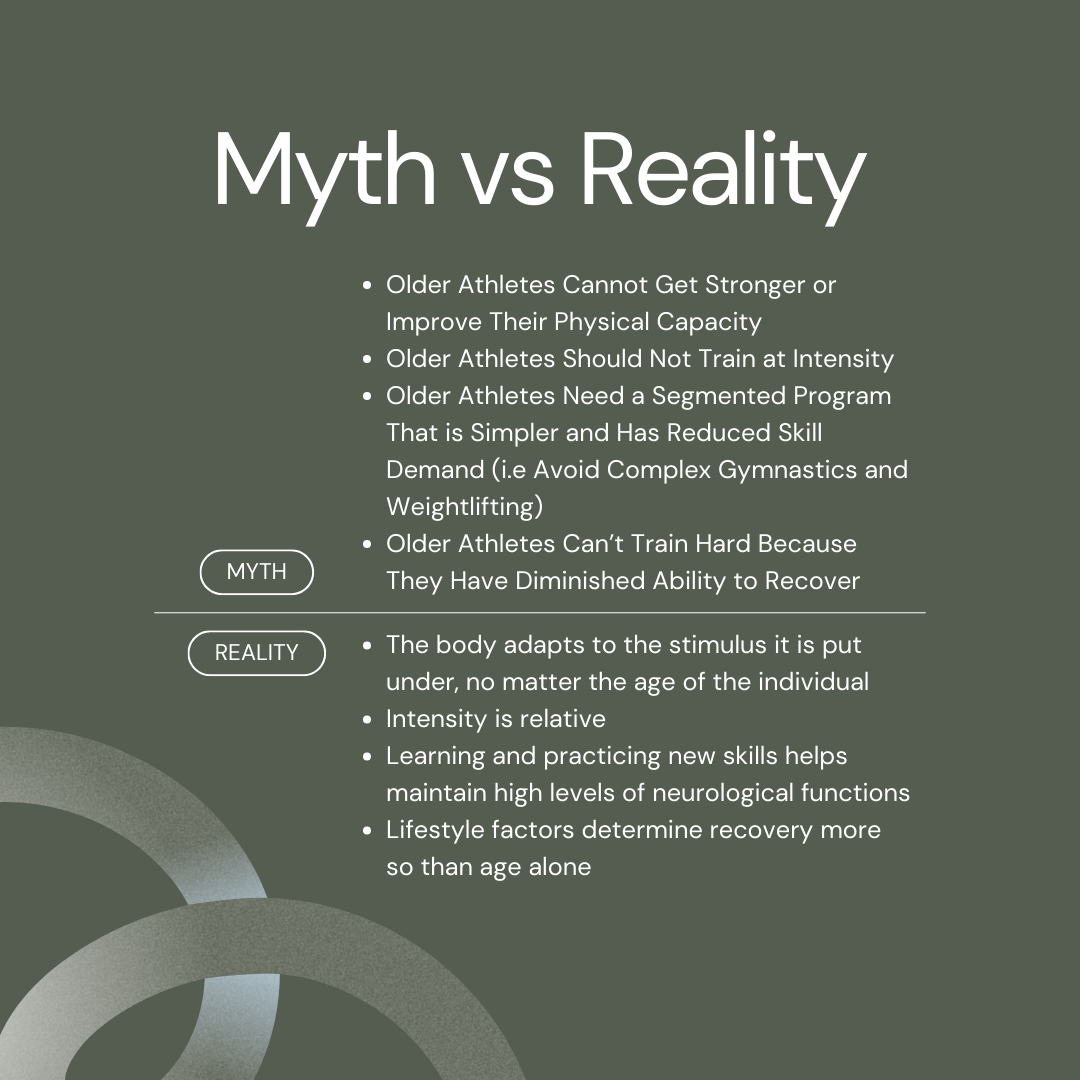
The first myth CrossFit mentions is that “Older Athletes
Cannot Get Stronger or Improve Their Physical Capacity”. Many claim that as you get older, you get weaker. We know this isn’t true. We know that when we put our body through difficult work (regardless of age) our body adapts and attempts to become more capable. This myth also implies that it doesn’t matter what you do, you will just get weaker. Take a look at the CrossFit Games Masters division and tell me that they have gotten weaker since starting CrossFit. Those are some super fit and strong athletes who only seem to be getting fitter.
Our second myth is “Older Athletes Should Not Train at Intensity”. This is blatantly and outrightly false. Intensity is relative. My intensity is not and will not be the same as Games athletes, grandma and grandpa’s intensity will not be the same as me. But when we all do the WOD, we are all gonna feel like we pushed at the same levels of intensity that we can manage. If that doesn’t make sense maybe this will - my intensity level 8 will be slower than a Games athlete’s level 8 but faster than grandma’s level 8, but we are all going at level 8. That is relative intensity. Not to mention that intensity is the driving factor behind what makes CrossFit so effective. As CrossFit says “Intensity is important within our program because it is the independent variable most commonly associated with maximizing the rate of return on favorable adaptation.” This essentially means that the more intensity we put forth, the more significant our fitness gains are. REGARDLESS of our age. Humans are adaptable creatures. The more appropriate stress we put on ourselves the more favorable outcomes we receive.
The third and fourth myths are that “Older Athletes Need a Segmented Program That is Simpler and Has Reduced Skill Demand (i.e Avoid Complex Gymnastics and Weightlifting)” and that “Older Athletes Can’t Train Hard Because They Have Diminished Ability to Recover”.
Aging athletes do not need a segmented program just as much as a young, spry 22 year old athlete doesn’t need a segmented program. As a matter of fact, aging athletes probably need MORE practice and work on complex gymnastics and weightlifting. This is one of my favorite things about practicing and learning complex gymnastics and weightlifting movements, and learning how to do them right. As we age, it becomes harder to learn these new skills and that is EXACTLY the reason why aging athletes need to do them. Will the aging athlete ever get a Ring Muscle-up? Maybe, but maybe not.
Quick story Time! I have taught Ring Muscle-ups and the progressions for it for years across my coaching career. One day (this was around a year and a half ago as of writing this) one of the older ladies at the gym asked me “why am I doing this? I’m not gonna do a Ring Muscle-up and I don’t care about doing this.” (what she wanted to do instead was a combination of some Banded Pull-ups and Push-ups instead - viable) I had to take a second and think. “Why am I telling her to do this? What does she gain from it? She isn’t going to do a Ring Muscle-up, the progression doesn’t necessarily build strength like practicing Strict Pull-ups and Dips.” I agreed with her and let her do what she wanted, but something didn't sit right. Later, I went through the training guide and journal articles searching for answers. Eventually I found an appropriate answer. By practicing these skills, she is gonna be able to maintain the neurological ability to learn new skills or maintain her ability to perform current skills at a high level as she ages. She is going to be able to move her shoulders through ranges of motion to keep her upper body stronger and more stable. She is going to get better at that movement and over time be able to increase her intensity of said movement. I told her those things and I could see the gears turn in her head and a twinkle in her eye as she realized what that meant. She knew that she had a choice - to “use it or lose it” - she decided that she wanted to use it. I would love to say that she is now doing Ring Muscle-ups, but that isn’t her goal. Nonetheless, she has told me multiple times since then how she is more willing to practice new skills and progressions because of how it will keep her mind and body young. To top it off, she told me something that really hasn’t ever left my mind. She said that she is afraid of losing the ability to do stuff as she gets older. I told her that doing CrossFit and constantly practicing and improving new skills helps avoid that.
Looking at the recovery myth, research isn’t very clear on if that actually happens. Research has shown that athletes who train regularly do have diminished recovery in ages over 70 years but that that is also consistent with a decline in VO2 max. If we change our focus to sedentary individuals then that degradation of recovery begins much earlier which suggests that it isn’t age that affects recovery but fitness levels and lifestyle factors. The lifestyle factor is a huge component. All individuals need to focus on recovery and methods to improve recovery. As aging occurs it is easy to forget that lifestyle factors affect recovery. Poor eating and sleeping habits, inadequate time spent de-stressing, etc. which can all lead to poor recovery. Yes as aging occurs there is eventually metabolic decline that affects recovery, but it is rarely the limiter. Instead, really focus on what practices are being done to aid recovery! If all those things are dialed in (i.e. very good nutrition practices, proper amount of actual sleep, hydration, mobilization, etc.) then we can begin to look at other components of the programming to address poor recovery.
One last thing. Things do begin to slow down as we age and we all accept that as natural. The problem isn’t that it doesn’t happen though. The problem is when it happens (most often at too young of an age) we accept that as the norm. For aging athletes, it takes much much much longer for the effects of aging to take place. CrossFit helps push back against those plagues and allows individuals to live longer, healthier and happier lives.
More Recent Posts
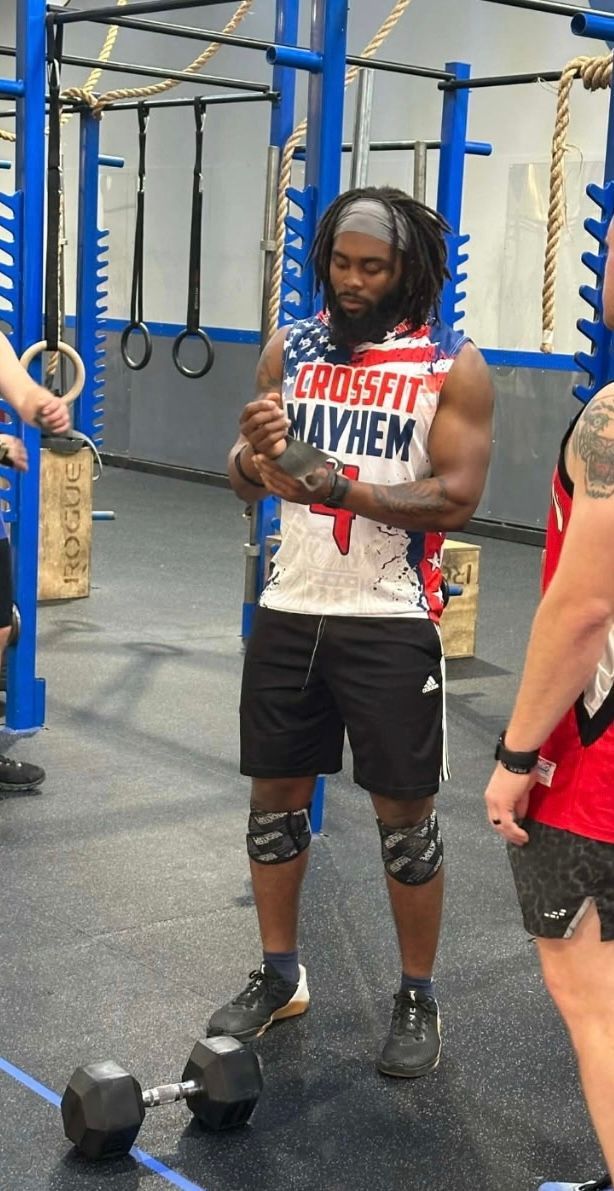
Meet Kaylon , our newest coach and a member of the Evansville CrossFit family! By day, he's a Union Ironworker and General Contractor. By the time he hits the gym, he's building strength as an athlete, pushing limits, and inspiring everyone around him. Since joining us in May 2025, Kaylon has leveled up his overall strength and work capacity, mastered the balance between heavy strength training & conditioning and discovered his passion for coaching others. On his fitness journey, Kaylon says: " I focus on discipline more than motivation. Showing up consistently and pushing a little harder every day adds up over time. I treat training like a non-negotiable part of my day. If it’s important to you, you make the time. I have found that working out at EC provides me with more discipline, more energy, and a stronger mindset that carries over into work, life and business ." But here's what makes Kaylon truly special—his genuine passion for coaching. He's driven by one mission: helping people realize they're capable of MORE than they think. Whether it's breaking through mental barriers, hitting that lift you thought was impossible, or discovering your inner strength, Kaylon is here to guide you there. “ A lot of people walk into the gym doubting themselves or feeling intimidated, and being able to help them break through those mental barriers is something I love. Watching someone hit a lift they never thought they could do, learn a new movement, or push through a tough workout and realize they’re stronger than they believed is one of the most rewarding things about being in this environment. For me, coaching isn’t just about fitness. It’s about helping people grow physically, mentally, and emotionally. The gym has a way of teaching discipline, resilience, and confidence, and those things carry over into every part of life. Being able to guide people through that process and help them unlock their potential is what drives my passion for coaching .” His advice to you: " Just start. You don't have to be in shape to begin, you just have to show up and be willing to work. Any movement can be scaled to your fitness level, but the one movement that can't be scaled is showing up ." What Kaylon has to say about the EC community: Training around people who work hard makes a big difference. The energy in the gym pushes you to do more than you would on your own. The other members will check on you to make sure you're doing okay. It's an amazing supportive community. His favorite thing about working out at EC: The mix of strength, conditioning, the friendly competitive drive and the supportive atmosphere. It keeps training fun and challenging! Welcome to the team, Kaylon! We're pumped to have you leading our community. Ready to start YOUR fitness journey? Come train with us and experience the Evansville CrossFit difference!

“I don’t have time to work out!” Sound familiar? We all say it. It seems like our workout routine is the first thing to go—even though it was the first resolution we made at the beginning of the new year. We buy all the equipment for our garage or home gym. That new treadmill that slowly becomes a clothing hanger. We spend money and time getting it all set up, just to realize we don't know what to do exactly and can't find the motivation to workout alone. Here's the thing: It's not about time. It's about priorities. The Reality Check: Your 24 Hours Let's do some math. You have 1,440 minutes in a day. If you sleep 8 hours (480 minutes), you have 960 minutes left. That's a lot of time. Yet somehow, when it comes to the gym, something gets in the way. So I'm asking you: What is eating up your time? Is it social media? (The average person spends 2+ hours daily) Is it work overload? Is it Netflix binges? Is it saying "yes" to everyone else's priorities but "no" to yours? Is it poor planning? You wake up with good intentions. But then your day gets loaded with meetings, errands, family obligations, and unexpected tasks. By the time you get a chance to workout later in the day, you're exhausted. The gym becomes something you'll do tomorrow, or next week, or when things calm down. Spoiler alert: Things never calm down. Life is always busy. The gym keeps sliding down your to-do list, until one day you realize you haven't been in weeks. Let's Reframe This What if instead of asking "How do I find an hour?" you asked "What do I need to stop doing to make room for an hour?" That's the real question. Here's what I know about people who show up consistently: - They schedule their workout like a business meeting (non-negotiable) - They identify time-wasters and cut them ruthlessly - They realize that fitness isn't a luxury—it's maintenance for their body and mind - They understand that one hour at the gym saves them time by boosting energy, focus, and mental health Where Can You Find (or Make) That Hour? Morning: Could you wake up 45 minutes earlier? (Yes, it sucks at first. Then it becomes your favorite part of the day.) Lunch Break: A quick 45-minute session beats scrolling on your phone anyway. Evening: Cut one TV show, one social media scroll session, one unnecessary errand. Multitask: Combine gym time with podcasts, audiobooks, or just mental space away from screens. Weekend: Even one session a week is better than zero. Here's My Offer I'm not going to guilt you. I'm not going to shame you. But I will help you . If you're stuck in avoidance mode, let's solve it together. Let's have a real conversation about : What's actually stopping you What your schedule really looks like What we can adjust to make fitness fit your life Which time slot makes the most sense for you The truth? One hour is not a lot of time. But it's enough to change your body, clear your mind, and build momentum. A Challenge For You: This week, track where your time actually goes. Not where you think it goes—where it really goes. Then ask yourself: "Is this the life I want? Are these my priorities?" If fitness matters to you (and I think it does, or you wouldn't be reading this), then it's time to act like it. Let's figure this out together. I want to help. Let’s take a few minutes to discuss ways we can help you at Evansville CrossFit. It goes beyond the workout of the day. It involves a conversation about your personal goals. Fitness, nutrition, time management. You know where to find me. Sharon Gonzales Evansville CrossFit 1230 Heinlein Road Evansville, IN 47725 (812) 250-8466 Instagram - @evansvillecrossfit Facebook - Evansville CrossFit P.S. — Seriously, reach out. Even just a 15-minute conversation can unlock the solution you've been looking for.
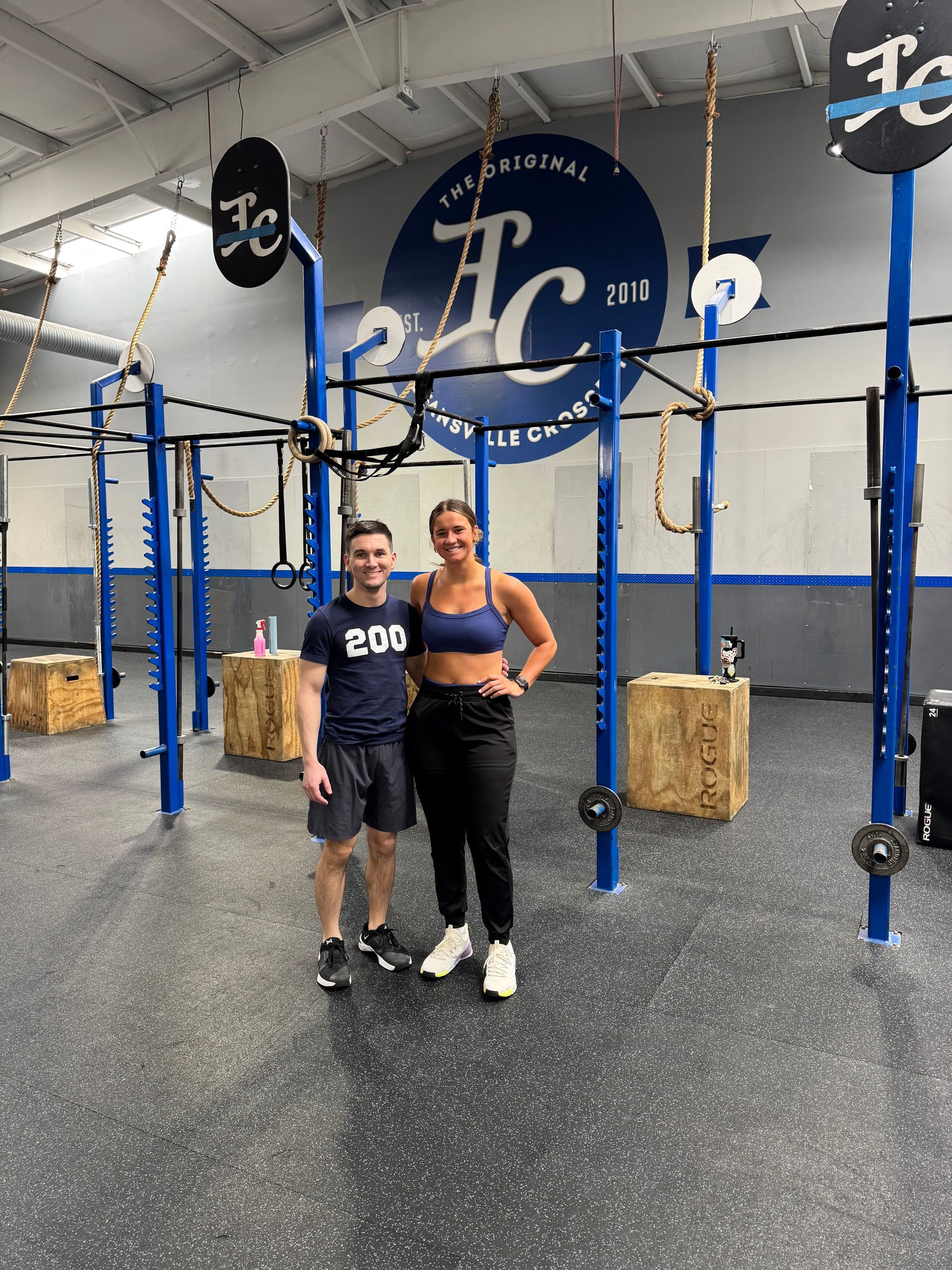
Stronger Together — Inside and Outside the Gym One of the most impactful things we see at Evansville CrossFit is what happens when people stop trying to do hard things alone. This month’s Member Spotlight features Braylee and Ellis, two nurses whose friendship, accountability, and commitment to showing up have fueled both their fitness progress and personal growth. Braylee’s Story Braylee joined Evansville CrossFit in August 2024 after moving to Indiana and looking for a new hobby—and new friends. What started as something unfamiliar quickly became a place of confidence, growth, and belonging. Since joining, Braylee has made PRs and performed lifts she never thought were possible. One of the most important lessons she’s learned is that slowing down and scaling is not failure—it’s often the key to long-term progress. As a nurse working long, exhausting hours, Braylee treats the gym as something to look forward to—an hour on her days off that’s just for her. The motivation comes from coaches who genuinely care and workout partners who make training fun and encouraging. Trying CrossFit was a leap outside Braylee’s comfort zone, but it sparked confidence that extends beyond the gym—creating motivation to try new things in other areas of life as well. Ellis’ Story Ellis officially joined Evansville CrossFit in July 2025 after a few drop-ins, balancing a demanding schedule as an ICU nurse, working weekend night shifts, and pursuing a second bachelor’s degree. Despite limited time and a constantly changing schedule, Ellis has already hit new personal records in the deadlift, clean & jerk, and snatch. The biggest challenge wasn’t physical—it was consistency. Long shifts, school responsibilities, and everyday life made it easy to find excuses. That’s where Braylee made the difference. Ellis intentionally fits fitness into life by blocking out 3–4 hours per week, sometimes training before night shifts, sometimes squeezing in a class between schoolwork and evenings, and occasionally doubling up on classes when schedules are packed. Beyond physical strength, Ellis has noticed a significant improvement in mental health. Between the emotional demands of ICU work, school stress, and an irregular sleep schedule, the support of coaches and the EC community helped Ellis through a difficult season—often without them even realizing it. Stronger Together What makes Ellis and Braylee’s story special isn’t just their individual progress—it’s the way they show up for each other. From accountability texts and shared classes to encouragement during tough workouts, they represent what Evansville CrossFit is built on: community, consistency, and support. Their Advice for New Members Ellis: Just start. No matter where you begin, you can grow with the help of the coaches here. Everything is scalable, and they’ll help you reach your goals. Braylee: You don’t have to be perfect—just committed.